I read the article "He's gotta have it" by David Denby. One thing I thought was really interesting was how the article failed to mentioned the death of Radio Raheem, the man who made the ultimate sacrifice given the violence. Like we mentioned in class, Lee was upset at critics who talked about Sal's victimization more than that of Radio Raheem's. This article talks about how after the fight started, "some white policemen arrive and kill a black boy." Instead of saying Radio Raheem, the author of this article just calls him a black boy. I think it's important to the story knowing who the black boy is, and how the police didn't need to kill him. Since Denby missed this important fact, it's really hard to believe the other information he talked about in the article.
The article also talked about Mister Senor Love Daddy's significance to the story as its "chronocler and troubadour." It aludes to the film "American Graffiti," and how in that movie, Wolfman plays a similar role as that of Mister Senor Love Daddy. I haven't seen "American Graffiti," but if you have, feel free to analyze that allusion.
I thought that in the article " Spike Lee's Do the Right Thing' turns 20" that it was very interesting how we got to see behind the scenes of the opinions of the cast, and also a little bit of the process of how the film came to be and what inspired it. Viewers had mixed opinions on the film. Some said that it "was a remarkable piece of work" (Vincent Canby) and on the opposite side some viewers were criticizing the fact that drugs were not shown or spoke of in a neighborhood where, in reality, drugs were a big problem. I think that it was a wise decision that Lee left it out. Having drugs in the movie would take away from what the film was about: racism. It would also make it more dark. At the end of the article I thought it was funny that Obama commented to Lee saying that him and his wife got together because of watching "Do the Right Thing". Lee says " I think he is a very smart man, because it he has taken Michelle to see "Driving Miss Daisy," things would of turned out a whole lot different."
David Denby's "He's gotta have it" article touches in the fact that Spike Lee's film is going to "create an uproar" and "divide the audience". This is very true. Lee's point was to make people think, and if that creates two different sides, so be it.
Denby gives Lee many props to trying to create a film such as "Do the right thing", but believes that Lee didn't make a very good finished project. Denby says that "Lee hasn't worked coherently", which is very true. Lee tried to create a film questioning racism in the modern world, but he seemed to have so many ideas that they didn't clearly come out in his film. There were too many ideas for one movie and too many ideas for one theme. If Lee really wanted to show real racism in a film, he should have made it more real and less "fictionalized".
Lee's attempt was a very good idea and if it was done right, it could be a relevant movie for even more years to come.
I read "He's Gotta Have It". I like how the author, David Denby, said that Mookie did the right thing, wrong thing, then everything. I think that's a good way to expain what Mookie did because he did a little of everything if you look at it in the right context. I find it odd what the author thinks Spike Lee thinks. The author says he would guess Spike Lee is against violence because it solves nothing, yet he thinks Lee would like to be seen as an angry man ready to smash things if the time came to smash things. A bit condradictory. Randy Nichols
i read the article Do the Right Thing by Roger Ebert. There were a couple of things within the article that, personally, i didn't exactly agree with. For one, i thought Sal was completely innocent. Although Sal's son may have been racist, Sal alone didn't really show any signs of discrimination. One thing that could possibly be considered racist on his part was calling Radio Raheem the N-word, and even then i think that was because him and Buggin Out had been bantering him. Also, he didn't make that remark until after Buggin Out had called him a racist word for an italian. Another thing, it seems as though Buggin Out failed to see that there were plenty of other American groups that also weren't up on the wall. It's an italian restaurant...it only makes sense that there would be italian americans on the wall. Not to mention that its his place, he can do whatever the hell he wants.
I read "He's Gotta Have It" by David Derby. I thought it was interesting that he said "Lee doesn't caricature the whites, and in his treatment of the older black charaters he shows appreciation for rumpled and messed-up people - people who have lost something or failed but still have good words to say". Thinking about that, you see characters who failed like Smiley who tries to sell pictures of MLK and Malcom X shaking hands or Radio Raheem who just fails to listen to others and goes after Sal, who is in fact white. Even after the breakout of many people like Sal, I think Sal was the last person to really have something good to say because he is not a racist, but simply a true person to admit that other people have problems that are incoherent like Radio Raheem (when he smashes his radio) or Buggin' Out (when he says go open up his own restaurant). Lee in fact doesn't picture Sal and his sons saying anything good because I think he does in fact want the words coming out of the blacks to be more meaningful to the community vs. what Sal, Vito, or Pino has to say. That is why I think this quote also describes Mookie very well because he's appreciated for doing the wrong thing and failing to treat Sal, who is white, the same as all the people in the neighborhood do despite walking off in the end of the movie with "Fight the Power" playing.
I read the article titled "Spike Lee's 'Do the Right Thing' Turns 20", it was pretty interesting to see what the actual actors thought of the script and the topic of racism as a whole. I would like to comment on a few things that stood out to me. The actor that played buggin out ironically is half black and Italian. Ginacarlo Esposito comments and says that he can see where both sides are coming from. Also Lee claims that to this day no person of color has asked him why Mookie threw the garbage can through the window. I believe that Mookie made the right and wrong decision, if the mob wouldn't have trashed and burned Sal's then they would have done something to Sal, Pino, and Vito. Perhaps they would have killed them just like the police killed Radio Raheem. On the other hand it could have been all prevented if Mookie would have tried to calm down his friends in Sal's Pizzeria. Sal was doing the kids a favor in staying open later then normal. -Tom Holtzman
I read the article “Spike Lee’s ‘Do the Right Thing’ turns 20.” It was eye-opening to read a bit about his inspiration for the film, and the death of Michael Griffith. To be honest, I wasn’t too surprised that it received only two Oscar nominations and no awards. I believe that is because the movie was not glamorous, and is not “Hollywoodized,” or pretty at all. Despite the fact that it is slightly fictionalized, it shows a damn-near correct version of the truth of the cities at that time. And sometimes, the truth hurts. However, I am glad that I got the opportunity to watch and experience Lee’s Do the Right Thing. As proven through many of the quotes from the various cast members. An interesting bit of info that I picked up from one of the early quotes from Lee, was that he originally wanted Robert De Niro to play Sal (De Niro liked it, but turned it down, saying it wasn’t “him”). I think the movie would be drastically different with De Niro playing the middle-man, Italian pizzeria owner. I’m almost glad that I did not know a lot of the actors in the movie, it helped me to view and focus in on the underlying messages and racial tensions a lot more than I could have otherwise.
I read "Do the Right Thing" by Roger Ebert. After reading this article I have to say that it was dead on. If focused on the topic of the movie, racism, and explains that some critics believed that this film would incite race riots, he shoots down those claims by stating that even though the movie is about racism, it represents all groups involved equally. I think that Lee did an excellent job of this and also of focusing on his target and not letting the other issues that run rampant in that neighborhood such as poverty and drugs. The author also goes in depth on this scene where Radio and Buggin' Out come to Sal's looking for trouble. Sal is not inherently a racist person but somewhere inside of him he can be prejudice as well. I happen to agree with everything Ebert covered in his article, it was clear and looked at both sides to of the matter before making a conclusion.
Ms. Hatten just finished her fourth year teaching in the English department at Edina High School and seventh year of teaching. She is a graduate of St. Olaf College and holds a master's degree in Literacy Education from the University of Minnesota. She has presented at national and local conferences regarding student blog use and Web 2.0 skills in the classroom. This past year she taught English 10, Art of Film I, and Public Speaking at EHS. She is currently pursuing her Ph.D. in critical literacy at the University of Minnesota. This is her first time teaching at STEPS!
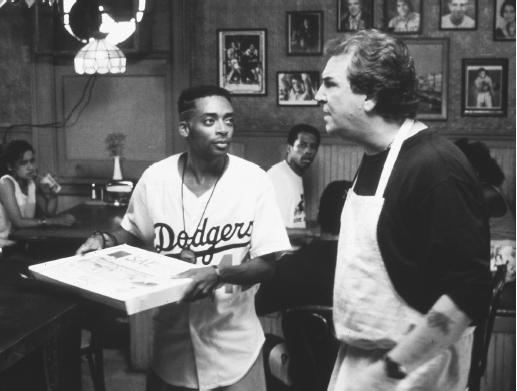


I read the article "He's gotta have it" by David Denby. One thing I thought was really interesting was how the article failed to mentioned the death of Radio Raheem, the man who made the ultimate sacrifice given the violence. Like we mentioned in class, Lee was upset at critics who talked about Sal's victimization more than that of Radio Raheem's. This article talks about how after the fight started, "some white policemen arrive and kill a black boy." Instead of saying Radio Raheem, the author of this article just calls him a black boy. I think it's important to the story knowing who the black boy is, and how the police didn't need to kill him. Since Denby missed this important fact, it's really hard to believe the other information he talked about in the article.
ReplyDeleteThe article also talked about Mister Senor Love Daddy's significance to the story as its "chronocler and troubadour." It aludes to the film "American Graffiti," and how in that movie, Wolfman plays a similar role as that of Mister Senor Love Daddy. I haven't seen "American Graffiti," but if you have, feel free to analyze that allusion.
I thought that in the article " Spike Lee's Do the Right Thing' turns 20" that it was very interesting how we got to see behind the scenes of the opinions of the cast, and also a little bit of the process of how the film came to be and what inspired it.
ReplyDeleteViewers had mixed opinions on the film. Some said that it "was a remarkable piece of work" (Vincent Canby) and on the opposite side some viewers were criticizing the fact that drugs were not shown or spoke of in a neighborhood where, in reality, drugs were a big problem. I think that it was a wise decision that Lee left it out. Having drugs in the movie would take away from what the film was about: racism. It would also make it more dark.
At the end of the article I thought it was funny that Obama commented to Lee saying that him and his wife got together because of watching "Do the Right Thing". Lee says " I think he is a very smart man, because it he has taken Michelle to see "Driving Miss Daisy," things would of turned out a whole lot different."
Shannon Patch hr.3
David Denby's "He's gotta have it" article touches in the fact that Spike Lee's film is going to "create an uproar" and "divide the audience". This is very true. Lee's point was to make people think, and if that creates two different sides, so be it.
ReplyDeleteDenby gives Lee many props to trying to create a film such as "Do the right thing", but believes that Lee didn't make a very good finished project. Denby says that "Lee hasn't worked coherently", which is very true. Lee tried to create a film questioning racism in the modern world, but he seemed to have so many ideas that they didn't clearly come out in his film. There were too many ideas for one movie and too many ideas for one theme. If Lee really wanted to show real racism in a film, he should have made it more real and less "fictionalized".
Lee's attempt was a very good idea and if it was done right, it could be a relevant movie for even more years to come.
Shoot. That last one about David Denby was from:
ReplyDeleteEllen S. Period 3
I read "He's Gotta Have It". I like how the author, David Denby, said that Mookie did the right thing, wrong thing, then everything. I think that's a good way to expain what Mookie did because he did a little of everything if you look at it in the right context. I find it odd what the author thinks Spike Lee thinks. The author says he would guess Spike Lee is against violence because it solves nothing, yet he thinks Lee would like to be seen as an angry man ready to smash things if the time came to smash things. A bit condradictory.
ReplyDeleteRandy Nichols
i read the article Do the Right Thing by Roger Ebert. There were a couple of things within the article that, personally, i didn't exactly agree with. For one, i thought Sal was completely innocent. Although Sal's son may have been racist, Sal alone didn't really show any signs of discrimination. One thing that could possibly be considered racist on his part was calling Radio Raheem the N-word, and even then i think that was because him and Buggin Out had been bantering him. Also, he didn't make that remark until after Buggin Out had called him a racist word for an italian. Another thing, it seems as though Buggin Out failed to see that there were plenty of other American groups that also weren't up on the wall. It's an italian restaurant...it only makes sense that there would be italian americans on the wall. Not to mention that its his place, he can do whatever the hell he wants.
ReplyDeletebrittany durst, hr. 3
I read "He's Gotta Have It" by David Derby. I thought it was interesting that he said "Lee doesn't caricature the whites, and in his treatment of the older black charaters he shows appreciation for rumpled and messed-up people - people who have lost something or failed but still have good words to say". Thinking about that, you see characters who failed like Smiley who tries to sell pictures of MLK and Malcom X shaking hands or Radio Raheem who just fails to listen to others and goes after Sal, who is in fact white. Even after the breakout of many people like Sal, I think Sal was the last person to really have something good to say because he is not a racist, but simply a true person to admit that other people have problems that are incoherent like Radio Raheem (when he smashes his radio) or Buggin' Out (when he says go open up his own restaurant). Lee in fact doesn't picture Sal and his sons saying anything good because I think he does in fact want the words coming out of the blacks to be more meaningful to the community vs. what Sal, Vito, or Pino has to say. That is why I think this quote also describes Mookie very well because he's appreciated for doing the wrong thing and failing to treat Sal, who is white, the same as all the people in the neighborhood do despite walking off in the end of the movie with "Fight the Power" playing.
ReplyDelete-Jackie Yip
I read the article titled "Spike Lee's 'Do the Right Thing' Turns 20", it was pretty interesting to see what the actual actors thought of the script and the topic of racism as a whole. I would like to comment on a few things that stood out to me. The actor that played buggin out ironically is half black and Italian. Ginacarlo Esposito comments and says that he can see where both sides are coming from. Also Lee claims that to this day no person of color has asked him why Mookie threw the garbage can through the window. I believe that Mookie made the right and wrong decision, if the mob wouldn't have trashed and burned Sal's then they would have done something to Sal, Pino, and Vito. Perhaps they would have killed them just like the police killed Radio Raheem. On the other hand it could have been all prevented if Mookie would have tried to calm down his friends in Sal's Pizzeria. Sal was doing the kids a favor in staying open later then normal.
ReplyDelete-Tom Holtzman
I read the article “Spike Lee’s ‘Do the Right Thing’ turns 20.” It was eye-opening to read a bit about his inspiration for the film, and the death of Michael Griffith. To be honest, I wasn’t too surprised that it received only two Oscar nominations and no awards. I believe that is because the movie was not glamorous, and is not “Hollywoodized,” or pretty at all. Despite the fact that it is slightly fictionalized, it shows a damn-near correct version of the truth of the cities at that time. And sometimes, the truth hurts. However, I am glad that I got the opportunity to watch and experience Lee’s Do the Right Thing. As proven through many of the quotes from the various cast members. An interesting bit of info that I picked up from one of the early quotes from Lee, was that he originally wanted Robert De Niro to play Sal (De Niro liked it, but turned it down, saying it wasn’t “him”). I think the movie would be drastically different with De Niro playing the middle-man, Italian pizzeria owner. I’m almost glad that I did not know a lot of the actors in the movie, it helped me to view and focus in on the underlying messages and racial tensions a lot more than I could have otherwise.
ReplyDelete-Dan Larson Hr. 3
I read "Do the Right Thing" by Roger Ebert. After reading this article I have to say that it was dead on. If focused on the topic of the movie, racism, and explains that some critics believed that this film would incite race riots, he shoots down those claims by stating that even though the movie is about racism, it represents all groups involved equally. I think that Lee did an excellent job of this and also of focusing on his target and not letting the other issues that run rampant in that neighborhood such as poverty and drugs. The author also goes in depth on this scene where Radio and Buggin' Out come to Sal's looking for trouble. Sal is not inherently a racist person but somewhere inside of him he can be prejudice as well. I happen to agree with everything Ebert covered in his article, it was clear and looked at both sides to of the matter before making a conclusion.
ReplyDelete-Theo hr. 3